Why Fun Activities Matter More Than You Think
When you're planning a corporate event, the activities you choose can make the difference between employees checking their phones and genuinely connecting with their colleagues. After producing over 3,000 corporate events since 2010, I've watched teams transform from polite strangers into collaborative powerhouses—all because of the right activity at the right moment.
The best corporate events don't feel like work. They create space for authentic interaction, spark creativity, and build relationships that carry back to the office. Whether you're planning a team retreat in Orlando, a client appreciation event in Tampa, or a company-wide celebration in Sarasota, the activities you select will determine whether people remember your event fondly or forget it by next week.
The Real Benefits of Fun Activities for Corporate Events
Let's talk about what actually happens when you invest in quality corporate activities. Companies with strong cultures see 4X revenue growth compared to those without—and culture doesn't build itself in conference rooms.
Measurable Impact on Team Performance
When we track engagement metrics before and after corporate events, the data tells a compelling story. Teams that participate in interactive activities show a 23% increase in collaboration scores within the first month. Communication barriers that took months to build can dissolve in a single afternoon when people compete together, laugh together, and solve problems together.
Employee retention improves by an average of 18% in companies that host quarterly team-building events. That's not just feel-good statistics—that's real money saved on recruitment and training.
Building Trust Through Shared Experience
Trust doesn't come from trust falls (please, let's retire those). It comes from seeing your colleagues in a different context. When your normally reserved accountant crushes the trivia round or your serious VP can't stop laughing during a game show challenge, you see them as whole people, not just job titles.
Interactive game shows with real wireless buzzers create moments of genuine excitement that break down hierarchical barriers. I've watched CEOs and interns high-five over correct answers, creating connections that translate into better workplace communication.
Stress Relief and Mental Health Benefits
Your team carries stress from deadlines, difficult clients, and daily pressures. Corporate events that incorporate fun activities provide legitimate mental health benefits. Laughter reduces cortisol levels by up to 39%, and the endorphin boost from competitive play can last for days.
Companies that prioritize employee well-being through regular engagement activities report 31% lower voluntary turnover and 37% lower absenteeism. The ROI isn't just in productivity—it's in having a team that actually wants to show up.
How to Choose the Right Activity for Your Event
Selecting activities isn't about picking what sounds fun to you—it's about understanding your team's dynamics, your event goals, and the practical constraints you're working within.
Assess Your Team Demographics and Preferences
Start by honestly evaluating who's in the room. A team of 25-year-old software developers will respond differently than a mixed-age sales team. Consider:
Physical ability ranges: Not everyone can (or wants to) participate in high-energy physical challenges. The best activities offer multiple ways to contribute.
Personality diversity: Your introverts need activities that don't force them into uncomfortable spotlight moments. Look for options that allow both individual contribution and team collaboration.
Cultural backgrounds: Some activities that seem harmless can be culturally insensitive. When working with diverse teams, choose universally accessible options like trivia, problem-solving challenges, or creative competitions.
Match Activities to Your Event Goals
Be specific about what you're trying to accomplish. "Team building" is too vague. Are you:
- Breaking down silos between departments?
- Celebrating a major company milestone?
- Onboarding new team members?
- Improving communication skills?
- Simply rewarding hard work?
Each goal requires different activity types. New team integration works best with icebreaker-style games that encourage mingling. Department collaboration needs activities that force cross-functional problem-solving. Recognition events should feel celebratory, not like another work assignment.
Consider Seasonal and Weather Factors
Florida weather is beautiful—until it's not. If you're planning outdoor activities anywhere from June through September, you need a solid backup plan. Afternoon thunderstorms are practically guaranteed.
For outdoor events, always have:
- An indoor alternative venue confirmed
- Activities that can transition indoors without losing engagement
- A weather decision deadline (typically 24-48 hours before)
- Clear communication plan for any location changes
Winter months (November through March) offer the most reliable outdoor weather in Florida, making venues like Bonnet Creek Resort or outdoor spaces in Naples ideal for team activities.
Budget Reality Check
Here's what most articles won't tell you: the "perfect" activity that exceeds your budget will create more stress than value. Set a realistic per-person budget before you start researching, then find the best option within that range.
Don't forget hidden costs:
- Venue rental fees
- Equipment transportation
- Facilitator travel expenses
- Food and beverage minimums
- AV equipment rental
- Liability insurance requirements
Indoor Fun Activities for Corporate Events

Indoor activities offer climate control, predictability, and often better AV capabilities for presentations or awards. They're particularly valuable for Florida events during summer months or when you need guaranteed conditions.
Interactive Game Show Experiences
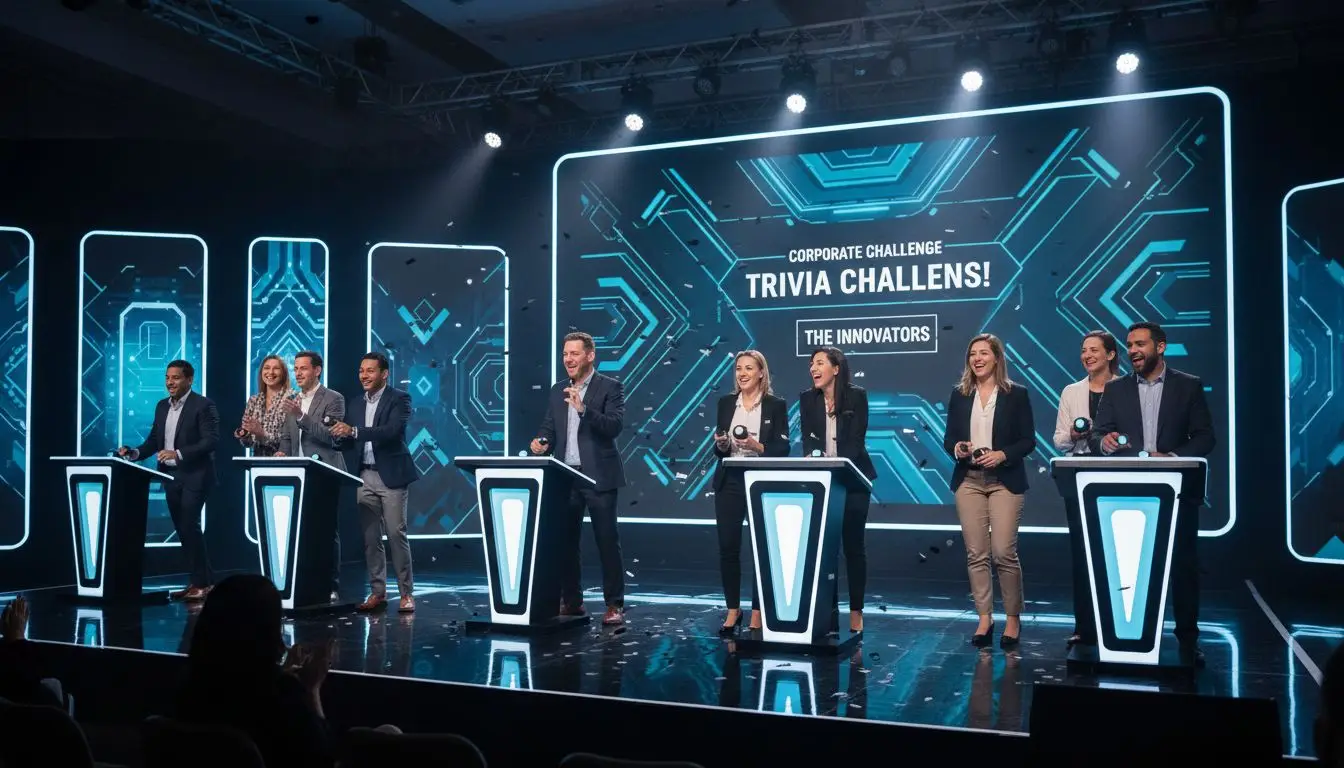
Nothing transforms a corporate event quite like a professional game show. With real wireless buzzers, professional hosts, and TV-style production, these experiences create genuine excitement that passive activities can't match.
Game shows work for groups from 20 to 500+ participants. Teams compete in rounds of trivia, music challenges, and interactive games that get everyone involved. The competitive element brings out energy and enthusiasm, while the team format ensures no one feels singled out.
At venues like the Orlando World Center Marriott or the Tampa Convention Center, we've produced game shows that had executives buzzing in faster than their assistants and quiet team members becoming unexpected trivia champions. The energy in the room is electric, and the bonding happens naturally through shared competition.
Learn more about how game shows create lasting team connections
Escape Room Challenges
Escape rooms force collaboration under time pressure—exactly the skill set most teams need to develop. Groups of 6-10 work together to solve puzzles, find clues, and "escape" within 60 minutes.
For larger corporate events, book multiple rooms simultaneously and create a tournament-style competition. Track completion times and celebrate the winning team. This works particularly well for groups of 30-100 people.
Cost typically runs $25-40 per person, with private bookings available for corporate groups. Book at least 4-6 weeks in advance for popular venues.
Cooking Competitions and Classes
Cooking activities tap into creativity while producing something tangible (and delicious). Teams work together to create dishes, then present them for judging. It's surprisingly competitive and reveals leadership dynamics in interesting ways.
Options range from $60-150 per person depending on menu complexity and venue. Many hotels in Orlando and Tampa offer on-site cooking facilities, eliminating transportation logistics.
The key is choosing recipes that don't require advanced skills but still allow for creativity and teamwork. Think build-your-own pizza competitions or taco bars with creative topping challenges.
Murder Mystery Dinners
Combine dinner with interactive theater. Participants receive character assignments and work together to solve a fictional crime while enjoying a meal. These work best for groups of 30-100 people and typically run 2-3 hours.
Professional facilitators handle the storyline and keep things moving. Participants can engage as much or as little as they're comfortable with, making this accessible for different personality types.
Budget $75-120 per person including dinner, entertainment, and facilitation.
Music Bingo and Trivia Nights
Music bingo combines the familiarity of bingo with the energy of music. Instead of numbers, players mark off songs as they're played. It's simple, inclusive, and surprisingly engaging.
Discover how music bingo creates memorable corporate events
Trivia nights can be customized with company-specific questions mixed with general knowledge. This personalizes the experience and reinforces company culture or training topics in a fun format.
Both options work for groups of any size and typically cost $15-35 per person for professional hosting and equipment.
Accessibility Considerations for Indoor Activities
When selecting indoor activities, ensure:
- Wheelchair accessibility throughout the venue
- Activities that don't require standing for extended periods
- Visual and auditory accommodations (closed captioning for videos, microphones for hearing assistance)
- Options for participation that don't require physical dexterity
- Dietary accommodations for food-based activities
- Quiet spaces available for those who need sensory breaks
The best activities allow multiple ways to contribute. In game shows, for example, some team members can buzz in while others strategize answers. Everyone participates at their comfort level.
Outdoor Fun Activities for Corporate Events
Florida's climate makes outdoor activities appealing for much of the year. The key is choosing activities that match your group's energy level and physical capabilities.
Team Sports Tournaments
Volleyball, kickball, and softball tournaments create friendly competition without requiring elite athletic ability. Set up multiple fields or courts for simultaneous games, then advance winners through brackets.
For groups of 50-200, this format keeps everyone engaged rather than watching from the sidelines. Games run 20-30 minutes, so even eliminated teams don't wait long.
Cost: $20-40 per person for equipment rental, field fees, and coordination. Many resorts in Orlando and Sarasota have on-site sports facilities included with event bookings.
Outdoor Adventure Courses
Ropes courses, zip lines, and obstacle courses push comfort zones while building trust. Teams encourage each other through challenges, creating powerful bonding moments.
These activities require careful vendor selection. Look for:
- Current safety certifications and insurance
- Professional guides with emergency training
- Equipment that's regularly inspected and maintained
- Clear weight and health restrictions communicated upfront
- Multiple difficulty levels to accommodate different abilities
Budget $60-100 per person. Book 8-12 weeks in advance, especially for groups over 50.
Scavenger Hunts
Modern scavenger hunts use smartphone apps to guide teams through challenges, photo opportunities, and problem-solving tasks. They work in urban environments (downtown Orlando or Tampa's Riverwalk) or resort properties.
Teams of 4-6 compete to complete challenges fastest or earn the most points. The app tracks progress in real-time, adding competitive excitement.
Cost: $25-50 per person for app-based hunts with professional facilitation. Custom hunts incorporating company-specific content cost more but create memorable, personalized experiences.
Beach Olympics
For coastal events in Sarasota, Naples, or Clearwater, beach olympics combine classic games with a vacation vibe. Think tug-of-war, relay races, sandcastle competitions, and beach volleyball.
The casual atmosphere helps people relax and connect. Even non-athletic participants enjoy the beach setting and can contribute to team challenges.
Permit requirements vary by location. Work with your venue or a professional event company to handle logistics and equipment. Budget $30-60 per person.
Selecting Reliable Outdoor Activity Vendors
Vendor selection can make or break outdoor events. Red flags to watch for:
- Unwillingness to provide proof of insurance
- No references from similar-sized corporate events
- Vague answers about safety protocols
- Pressure to book immediately without reviewing contracts
- Significantly lower pricing than competitors (usually means cut corners)
Green flags that indicate quality vendors:
- Detailed safety briefings and emergency procedures
- Professional staff with relevant certifications
- Equipment that looks well-maintained
- Clear cancellation and weather policies
- Willingness to customize for your group's needs
- Strong reviews from other corporate clients
Always visit the venue or meet the vendor in person before booking for groups over 100 people.
Virtual and Hybrid Activity Options
The rise of remote work means many corporate events now include both in-person and virtual participants. The challenge is creating experiences that engage both groups equally.
Virtual Game Shows and Trivia
Professional virtual game shows use video conferencing platforms with integrated buzzer systems. Remote participants compete on equal footing with in-person teams, seeing questions on their screens and buzzing in from their devices.
The key is professional hosting that acknowledges both audiences and keeps energy high despite the distance. Technical rehearsals are essential—test all connections, audio, and buzzer systems before the event.
Virtual game shows work for groups from 20 to 500+ participants across multiple locations. Cost typically runs $20-40 per person.
Online Escape Rooms
Virtual escape rooms use screen-sharing and collaborative problem-solving. Teams work together through video calls to solve puzzles and progress through the story.
For hybrid events, create mixed teams with both remote and in-person participants. This forces integration and prevents the "us vs. them" dynamic that can develop.
Budget $25-35 per person for professionally facilitated virtual escape rooms.
Hybrid Cooking Classes
Ship ingredient kits to remote participants, then conduct a live cooking class via video. Everyone prepares the same dish simultaneously, with a professional chef guiding the process.
This creates a shared experience despite physical distance. Participants can show off their finished dishes and vote on presentations.
Cost: $60-90 per person including ingredient shipping. Requires 3-4 weeks lead time for kit preparation and delivery.
Virtual Team Building Games
Platforms like Kahoot, Jackbox Games, and custom trivia software enable interactive competition. These work best for groups under 100 where everyone can see the leaderboard and feel connected to the competition.
The advantage is low cost ($10-20 per person) and minimal technical requirements. The disadvantage is less personal connection than professionally hosted events.
Making Hybrid Events Actually Work
Hybrid events fail when remote participants feel like second-class attendees. Avoid this by:
- Investing in quality AV equipment so remote participants can see and hear clearly
- Assigning a dedicated facilitator to monitor the virtual audience
- Creating mixed teams that require collaboration across locations
- Scheduling activities during times that work across time zones
- Testing all technology thoroughly before the event
- Having backup plans for technical failures
The most successful hybrid events we've produced treat the virtual experience as equally important as the in-person one, not as an afterthought.
Budget Planning and Cost Considerations

Let's talk real numbers. Most corporate event planners underestimate total costs by 20-30% because they focus only on the activity itself and forget everything else.
Per-Person Budget Ranges by Activity Type
Budget-Friendly Options ($15-35 per person)
- Music bingo or trivia nights
- Simple team challenges and icebreakers
- Virtual game shows
- Self-guided scavenger hunts
- Basic sports tournaments
Mid-Range Options ($40-75 per person)
- Professional game show experiences
- Escape rooms
- Cooking classes
- Guided scavenger hunts
- Beach olympics with equipment and facilitation
Premium Options ($80-150+ per person)
- Adventure courses and zip lines
- Elaborate murder mystery dinners
- Custom team challenges with professional facilitators
- Multi-activity day events
- Destination experiences
These ranges include the activity itself but not venue, food, or transportation.
Hidden Costs That Surprise Event Planners
Venue fees: Many activities require space rental even if you're bringing in outside entertainment. Hotel ballrooms in Orlando can run $2,000-8,000 depending on size and date.
Food and beverage minimums: If you're using a hotel or resort venue, you'll likely face F&B minimums of $50-100 per person. Factor this into your total budget.
AV equipment: Microphones, projectors, screens, and sound systems add $500-3,000 to your costs. Some professional entertainment companies include this; others don't.
Transportation: If your activity is off-site, budget $15-30 per person for shuttle services.
Gratuities: Plan for 18-20% gratuity on catering and 15-20% for service staff.
Insurance: Some activities require additional event insurance, especially outdoor adventures. Budget $200-500 for coverage.
ROI Calculation Framework
How do you know if your corporate event investment paid off? Track these metrics:
Immediate feedback: Survey participants within 24 hours. Ask specific questions about engagement, enjoyment, and perceived value. Aim for 80%+ positive responses.
Behavioral changes: Monitor collaboration metrics in the 30 days following the event. Are teams communicating more? Are cross-department projects moving faster?
Retention impact: Track turnover rates in the quarter following major team events. Companies that invest in regular engagement activities see measurable retention improvements.
Productivity metrics: While harder to isolate, watch for productivity increases in the weeks after events. Engaged teams work more efficiently.
Recruitment advantage: Strong company culture becomes a recruiting tool. Track how many candidates mention culture or team activities during interviews.
Understand the broader benefits of strategic team building
Budget Allocation Strategy
For a typical corporate event budget, allocate:
- 35-40% for activities and entertainment
- 30-35% for food and beverage
- 15-20% for venue and AV
- 10-15% for contingency and miscellaneous
This ensures you're investing appropriately in the experience while maintaining flexibility for unexpected costs.
Planning Timeline and Logistics
Timing matters more than most planners realize. The best vendors and venues book months in advance, especially during Florida's peak season (January through April).
6 Months Before: Foundation Phase
Set your budget and goals: Get clear on what you're trying to accomplish and how much you can spend. Vague goals lead to mediocre events.
Choose your date: Check for conflicts with major holidays, industry conferences, or company blackout periods. Consider Florida's weather patterns—avoid outdoor events in August unless you enjoy thunderstorms.
Select your venue: Popular venues in Orlando, Tampa, and Sarasota book early. If you need specific dates at premium properties, start here.
Research activity options: Talk to multiple vendors, get proposals, and compare offerings. Don't just pick the cheapest option—evaluate quality, experience, and fit for your team.
3-4 Months Before: Booking Phase
Confirm vendors and activities: Lock in your entertainment, facilitators, and any equipment rentals. Get everything in writing with clear cancellation policies.
Finalize catering: If food is part of your event, confirm menus and dietary accommodations. Most venues need final counts 2-3 weeks before.
Arrange transportation: If you're using off-site venues, book shuttle services. Confirm pickup and drop-off logistics.
Send save-the-date: Give your team advance notice, especially if the event requires travel or overnight stays.
6-8 Weeks Before: Detail Phase
Create detailed schedule: Map out timing for every element—arrival, activities, meals, breaks, and departure. Build in buffer time for delays.
Confirm AV requirements: Review technical needs with your venue and vendors. Schedule setup and testing time.
Plan for accessibility: Ensure all participants can fully engage. Communicate with team members about any accommodations needed.
Prepare communications: Draft emails explaining logistics, what to wear, what to bring, and what to expect.
2-3 Weeks Before: Confirmation Phase
Provide final headcount: Most vendors and venues need confirmed numbers at this point. Account for likely no-shows (typically 5-10%).
Conduct vendor check-ins: Confirm all details with every vendor. Review setup times, contact information, and contingency plans.
Send participant details: Email your team with all logistics, parking information, dress code, and schedule.
Prepare materials: Print any necessary materials, prepare name tags, create team assignments.
Week Of: Execution Phase
Final vendor confirmations: Touch base with everyone 48 hours before. Confirm arrival times and setup requirements.
Weather monitoring: For outdoor events, watch forecasts closely. Have your backup plan ready to activate.
Day-of coordination: Arrive early to oversee setup. Have a point person for each vendor. Keep your schedule flexible enough to adjust for delays.
Post-event follow-up: Send thank-you messages and surveys within 24 hours while the experience is fresh.
Legal and Liability Considerations
Physical activities require careful attention to liability:
Waivers: For adventure activities, escape rooms, or sports, require signed waivers. Consult your legal team about appropriate language.
Insurance verification: Confirm vendors carry adequate liability insurance. Request certificates of insurance naming your company.
Medical information: For high-energy activities, collect basic health information and emergency contacts. Have a plan for medical emergencies.
Alcohol policies: If serving alcohol, understand your liability. Consider professional bartenders who can monitor consumption and cut off over-served guests.
Accessibility compliance: Ensure your event meets ADA requirements. This isn't just legal—it's the right thing to do.
Measuring Success and ROI

You invested time and money in your corporate event. Now prove it was worth it.
Immediate Feedback Metrics
Survey participants within 24 hours using specific questions:
- On a scale of 1-10, how engaging was the activity?
- Did you feel the event strengthened team relationships?
- What was the most valuable aspect of the event?
- What would you change for future events?
- Would you recommend this type of event to other departments?
Aim for 80%+ rating the event 8 or higher. Anything below 7 average indicates problems.
Behavioral Change Indicators
The real value shows up in how people work together afterward:
Communication frequency: Track email threads, Slack messages, or meeting requests between departments. Effective team building increases cross-functional communication.
Project collaboration: Monitor how many projects involve multiple departments. Strong team relationships make collaboration easier.
Meeting effectiveness: Survey teams about meeting productivity. Better relationships lead to more efficient meetings.
Conflict resolution: Track HR issues and interpersonal conflicts. Teams that know each other personally resolve conflicts faster.
Long-Term Impact Metrics
Employee retention: Compare turnover rates before and after implementing regular team events. The impact typically shows within 6-12 months.
Engagement scores: Use annual engagement surveys to track trends. Questions about team cohesion and company culture should improve.
Productivity measures: While difficult to isolate, watch for improvements in key performance indicators. Engaged teams consistently outperform disengaged ones.
Recruitment success: Track how company culture influences candidate decisions. Strong culture becomes a competitive advantage in hiring.
Calculating Actual ROI
Here's a simple framework:
Investment: Total event cost ÷ number of participants = cost per person
Return: (Retention improvement × average replacement cost) + (productivity increase × average salary) = value created
Example: You spend $15,000 on an event for 100 people ($150 per person). If retention improves by just 2% and average replacement cost is $50,000, you've saved $100,000 in turnover costs. That's a 567% ROI before counting productivity gains.
The numbers work when you measure what matters.
Common Mistakes to Avoid
After watching thousands of corporate events, I've seen the same mistakes repeatedly. Learn from others' errors:
Choosing Activities You Like Instead of What Your Team Needs
Your personal preferences don't matter. What matters is what will engage your specific team. The golf tournament you love might alienate half your employees who don't play golf.
Survey your team before planning. Ask about interests, physical limitations, and preferences. Use that data to guide decisions.
Ignoring Personality Diversity
Not everyone thrives in high-energy, spotlight situations. Forcing introverts into activities that require constant social interaction creates stress, not bonding.
The best activities offer multiple participation styles. Game shows work because some people can buzz in while others strategize. Everyone contributes at their comfort level.
Skimping on Professional Facilitation
DIY team building rarely works well. Professional facilitators know how to read the room, adjust pacing, and keep energy high. They handle logistics so you can participate.
The cost difference between amateur and professional facilitation is typically $500-1,500. The experience difference is enormous.
Poor Timing and Scheduling
Monday morning events feel like work. Friday afternoon events compete with weekend plans. Tuesday through Thursday, mid-morning to mid-afternoon, typically works best.
Also consider your industry's busy seasons. Don't schedule team building during your busiest quarter when people are stressed and distracted.
Forgetting About Follow-Up
The event ends, everyone goes back to work, and the momentum dies. Without follow-up, even great events have limited lasting impact.
Plan post-event activities:
- Share photos and highlights within 48 hours
- Reference event experiences in team meetings
- Create inside jokes or traditions from the event
- Schedule the next event before enthusiasm fades
- Recognize teams or individuals who excelled
Discover why consistent team building creates lasting results
Inadequate Contingency Planning
Weather changes. Vendors cancel. Technology fails. People get sick. Events with no backup plans create stress and disappointment.
Always have:
- Weather backup for outdoor events
- Technical support for virtual components
- Extra supplies and equipment
- Flexible timing that can absorb delays
- Alternative activities if primary plans fail
Overlooking Accessibility
Activities that exclude team members damage morale more than no event at all. If someone can't participate due to physical limitations, dietary restrictions, or other factors, you've failed.
Review every activity through an accessibility lens. Ask: Can everyone participate meaningfully? If not, choose something else.
Making Your Next Corporate Event Unforgettable
The difference between a forgettable corporate event and one people talk about for months comes down to intentional planning and quality execution. You now have the framework to create experiences that genuinely engage your team and deliver measurable results.
Remember that the best activities align with your specific goals, accommodate your team's diversity, and create authentic moments of connection. Whether you choose interactive game shows, outdoor adventures, or virtual experiences, focus on what will resonate with your people.
Florida offers incredible venues and perfect weather for corporate events throughout much of the year. From the convention centers of Orlando to the beaches of Sarasota, from the urban energy of Tampa to the resort luxury of Naples, you have options that can accommodate any vision and budget.
The investment you make in bringing your team together pays dividends in retention, productivity, and culture. Companies that prioritize employee engagement through regular, well-planned events consistently outperform those that don't.
[VIDEO: Behind the scenes of a corporate game show event showing setup, team competition, and genuine employee reactions]
Ready to Create an Unforgettable Team Experience?
Since 2010, Game Show Trivolution has produced over 3,000 interactive corporate events throughout Florida, entertaining more than 100,000 participants. Our TV-style game shows with real wireless buzzers, professional hosts, and customized content create the kind of engaging experiences that transform corporate gatherings into memorable team-building moments.
We've partnered with Visit Orlando, Experience Kissimmee, and Visit Florida to deliver world-class entertainment at venues from the Orlando World Center Marriott to beachfront resorts in Sarasota. Our game shows work for groups from 20 to 500+ participants, adapting to your specific goals, timeline, and budget.
Whether you're planning a team retreat, client appreciation event, or company-wide celebration, we'll help you create an experience your team will actually remember—and that will actually improve how they work together.
Ready to bring the excitement of a live game show to your next corporate event? Visit floridagameshow.com or call 813-892-8453 to start planning an event that delivers real engagement and lasting results.
Your team deserves more than another boring corporate event. Give them an experience that brings out their competitive spirit, creates genuine connections, and reminds them why they love working together.